A personal reflection on identity, friendship, and staying true to yourself
I’ll be honest, when my daughter first introduced us to K-Pop Demon Hunters on Netflix, I tried really hard not to roll my eyes. K-Pop? Really? We’d gotten Netflix to watch something else entirely (we’re big fans of the Addams family and wanted to catch season two of Wednesday). But my youngest son selected the first thing we watched – K-Pop Demon Hunters – and I’m so glad he did.
This animated film completely caught me off guard. What started as reluctant viewing became something that spoke directly to my soul.
There are some spoilers in this, so if you haven’t watched the movie or need context to this writing, please watch the film first.
The Story That Hit Home
At its heart, the film follows the band Huntrix as members Rumi, Mira and Zoey navigate both literal demon hunting and the more personal demons we all face — the struggle to be authentic in a world that constantly asks us to conform.
Rumi is part human, part demon, which creates an obvious conflict when you’re supposed to be hunting demons. But the real conflict isn’t supernatural — it’s deeply human. She has spent her entire life hiding part of who she is because she has been told that’s what she needs to do to fit in, to be accepted, and to survive.
As someone who’s struggled for years with authenticity and feeling different, Rumi’s story resonated with me in ways I didn’t expect.
The Weight of Conformity
Many of us “weird kids” who became “weird adults” understand this struggle intimately. Throughout school, work, and life in general, we learn to conform — to what the education system wants, what employers expect, what society deems “normal.” We mask parts of ourselves to function, graduate, get promoted, and keep the peace.
The pressure is real, especially for those of us dealing with mental health challenges or anything outside conventional norms. People get uncomfortable when you show your authentic self, and that discomfort can quickly turn into alienation.
I remember a childhood sleepover where my need to get home for chores triggered what I now recognize as anxiety-induced obsessive behavior. My meltdown over needing to complete tasks led to my leaving in a hurry. When the chore took way less time than I expected, my “friends” decided they didn’t want to hang out with me anymore. For a kid who already struggled with friendships, it was devastating.
In the film, people’s interactions with the demons aren’t scary. They start as whispers of self-doubt that suck the soul away from people. Seeing this as a visual metaphor for what happens in our heads when negativity comes into play is eye-opening. I didn’t think of intrusive thoughts as soul-sucking, but they are because they destroy your chances of finding happiness.
These experiences teach you to shut down, to keep that different part of yourself locked away.
The Power of True Friendship
What makes K-Pop Demon Hunters so powerful is how it shows authentic friendship alongside personal growth. Throughout the film, Rumi’s bandmates support her even when she can’t fully support herself. They create space for her to be vulnerable and real, but she doesn’t always take it.
Watching this as an adult who often struggles to build deep connections, I felt envious of that kind of friendship. It takes special people to truly accept all parts of someone, especially the messy, complicated parts we’re taught to hide.
The film’s exploration of friendship reminded me how precious it is to find people who let you be yourself without judgment — people who understand that sometimes when you interrupt, it’s not rudeness but an overflow of the ADHD brain, or that your quirks stem from a place you don’t quite understand rather than defiance.
Music as Medicine
The soundtrack deserves special mention. Sometimes it’s easier for me to process emotions and meaning through music, and these songs deliver powerful messages about authenticity and self-acceptance.
The song “Free” particularly struck me with its powerful message about facing our fears instead of running from them. The lyrics explore themes of trust, vulnerability, and finding someone who truly sees you. Lines about not being able to fix what we never face, and questioning why it feels right to open up to certain people, hit me right in the heart. The way the voices interweave captures that beautiful feeling of not being alone in your journey — of finding someone who makes authenticity feel safe rather than scary.
Several songs explore the themes of breaking free from constraints, whether self-imposed or imposed by others. For someone still working on self-confidence daily, these messages hit hard.
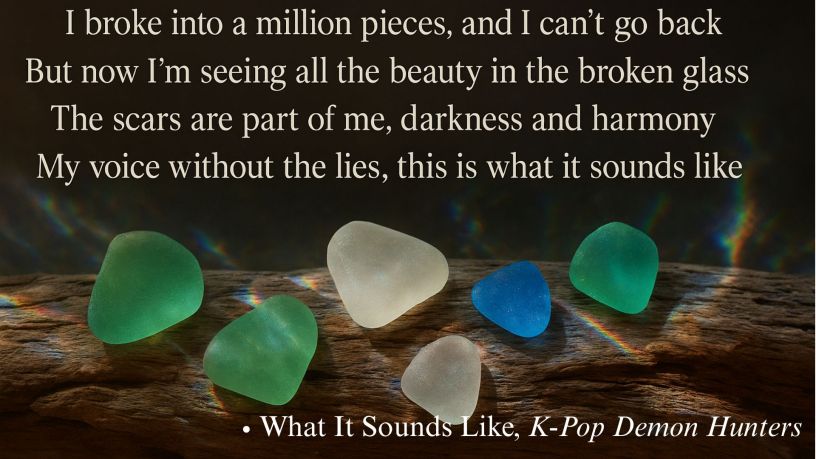
Hard enough that I’ve decided to make What It Sounds Like, my song for 2025. Every year, I pick a song that resonates with me as something to maybe strive for or that defines what that year has been like so far.
What It Sounds Like reminds me of my collection of sea glass. At one point, they were parts of bottles, bowls, plates — things in someone’s home to admire or store other items. That jagged, broken glass that was weathered by the elements is more beautiful than before. The glass become a prism of sorts, making the light extra special. That light is reflected in your true self, flaws and all.
Visual Beauty and Cultural Appreciation
Beyond the emotional impact, K-Pop Demon Hunters is visually stunning. The animation style reminded me of the Spider-Verse films — vibrant, dynamic, and engaging. The film thoughtfully incorporates Korean cultural elements, blending modern and traditional in ways that feel respectful and authentic.
The character design is particularly noteworthy. Derpy, a spirit animal companion, is adorable and provides needed comic relief. Even the demons, while not appropriate for young children, are designed with artistic care rather than gratuitous scary imagery.
A Message of Hope
What ultimately makes this film special is its message that authenticity is not only possible but powerful. Rumi learns that hiding parts of herself doesn’t protect her — it diminishes her. When she finally embraces all aspects of her identity, she becomes stronger, not more vulnerable.
For those of us still working on this journey, the film offers hope. It suggests that it’s never too late to start living authentically.
Final Thoughts
K-Pop Demon Hunters isn’t just entertainment — it’s a reminder that we’re not alone in our struggles with identity and belonging. Whether you’re dealing with mental health challenges, neurodivergence, or simply the universal experience of not quite fitting in, this film offers both validation and hope.
The songs have been stuck in my head for two weeks now, and I’m okay with that. Sometimes we need reminders set to catchy tunes that authenticity is worth fighting for and that the right people will support us through that fight.
If you’re looking for something that combines stunning visuals, great music, and genuine emotional depth, give K-Pop Demon Hunters a chance. You might find yourself reflected in ways you didn’t expect.
What unexpected places have you found inspiration? Feel free to share your thoughts in the comments.
Note: I recommend this film for teens and up due to some intense demon imagery and themes. While not graphic, it may not be suitable for children under 12.
 Mountain Mama Adventures