Words are my world.
By day, I navigate dense government documents and craft social media announcements meant to spark curiosity or inspire someone to attend a community event. I spent 30 years as a journalist writing or designing ways for people to look at words.
I use words when I’m learning, when I’m parenting, when I’m venting, celebrating, or just surviving. While I’m not always eloquent, I try to be authentic — and this blog is where I let that realness live.
This post marks the beginning of something I’ve wanted to get back to for a while: sharing the little things that bring me joy. Maybe you’ll find something here that makes you smile, or feel seen, or want to try something new. That’s the hope.
Today, let’s talk about bread.
During the pandemic, people turned to hobbies for comfort: knitting, puzzles, gardening, etc.. Mine was blogging about my garden, which gave me a sense of control and calm in a chaotic world. That blog is long gone, but I decided to bring its spirit here, alongside my love for all things cozy and meaningful.
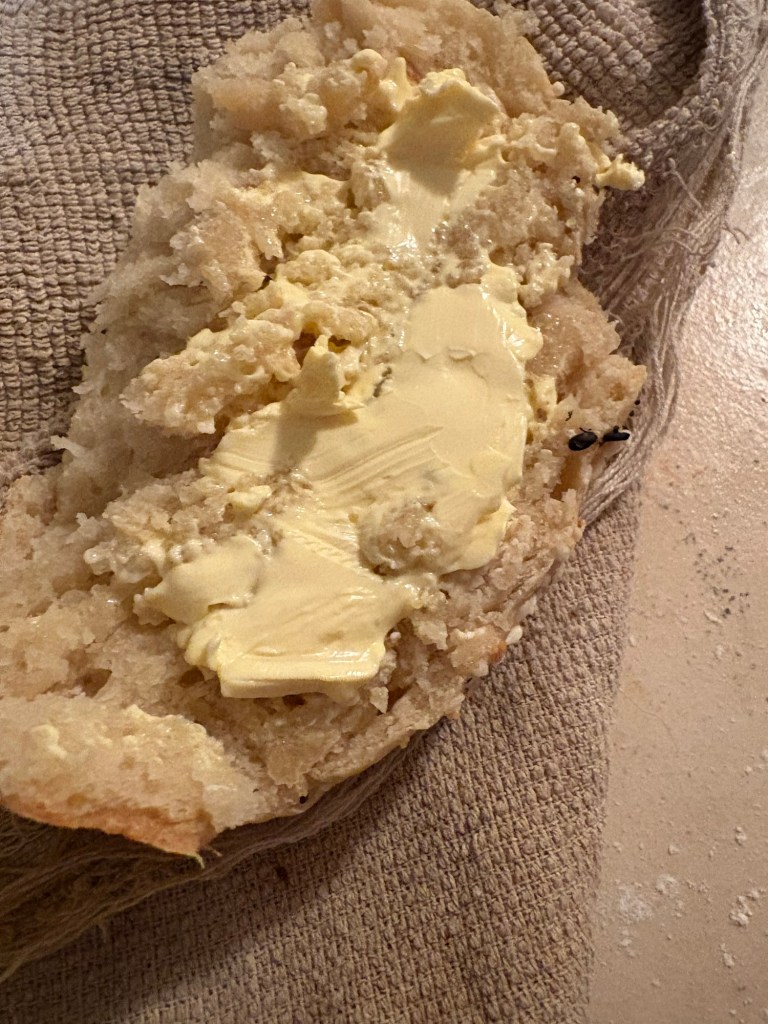
One of the most comforting things I make regularly is bread. Simple, warm, crusty-on-the-outside, soft-on-the-inside bread. The kind that smells like home when it’s baking. And yes, I love bread mostly because it’s a vehicle for butter.
My dad used to joke that when my mom was pregnant with me, she craved butter sandwiches. I am a big fan of such sandwiches, although I add cinnamon and sugar. Cinnamon toast is one of those nostalgic joys that feels like a hug.
In our house, bread is love. It’s also a bit of a negotiation.
My husband has gotten healthier over the years, and I’m proud of him. He’s conscious of what’s in our food, and he’s taught me to think twice before tossing something in the grocery cart. But sometimes, it’s a lot, especially when you realize how long store-bought bread stays “fresh.” Those ingredient lists can be longer than the book I’m trying to finish.
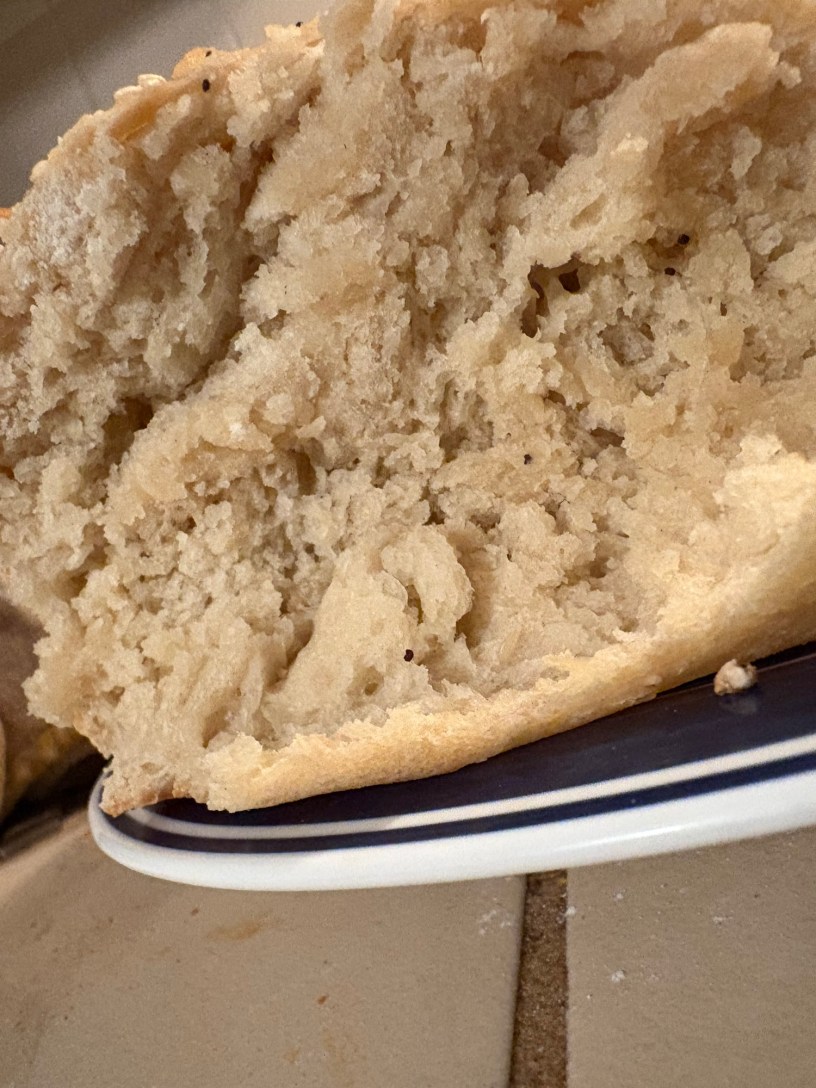
When we lived in Appalachia, we had access to beautiful bread from local bakeries: hearty loaves with chewy crusts and complex flavors. We haven’t found anything quite like it on our spot on the East Coast, so I started making our own every weekend. And this recipe? It’s the easiest one I’ve ever tried.
My Favorite Simple Bread Recipe
No kneading. No starter. Just a bowl, a spoon, a little patience, and a love for fresh bread. I found it online, but can’t seem to find it now.
Ingredients:
- 1 ½ cups warm water (about 105–115°F, or as warm as your tap comfortably runs—not hot enough to burn you)
- 1 packet (2¼ teaspoons) active dry yeast
(I recommend active dry yeast for this recipe; fast-rising yeast behaves differently and doesn’t yield the same texture.) - 1 ½ teaspoons salt
(I use pink Himalayan salt, but if you’re using fine table salt, try 1¼ teaspoons since the grains are denser by volume.) - 3 ½ cups all-purpose flour
- Extra flour (about 1 cup) for handling and dusting
Directions:
- In a large mixing bowl, add the yeast and salt.
- Pour in the warm water and stir until everything dissolves.
- Add 3 ½ cups of flour. Stir until it forms a sticky, shaggy dough. Add small amounts of extra water only if needed to incorporate all the flour.
- Cover the bowl with a towel or plastic wrap. Let it rise in a warm spot for 2 hours.
- About 20 minutes before the dough is done rising, preheat your oven to 350°F.
- Grease a loaf pan (I use a standard 9×5-inch one) with olive oil or butter.
- Sprinkle some flour on your hands to handle the dough. Gently pull it away from the sides of the bowl, using about ¼ cup of extra flour to help with stickiness.
- Transfer the dough to the greased pan. Don’t worry if it doesn’t fill the whole pan—it spreads and “poofs up” as it bakes.
- Bake for 35-45 minutes. The crust should be golden, and when you tap it, it should sound hollow.
- Let it cool for at least 10 minutes (if you can wait that long), then slice and slather with butter or cinnamon sugar, if you’re feeling nostalgic.
About Sourdough (Because I Love Culinary History)
This recipe uses commercial yeast and doesn’t require a sourdough starter, but I love sourdough, so let’s clear up makes sourdough, well .. sourdough.
A sourdough starter is a living culture of wild yeast and bacteria that ferments flour and water. It’s what gives sourdough its tangy flavor and chewy texture. Real sourdough relies on this natural fermentation process: not just a “simple ingredient list” or added vinegar to mimic the taste.
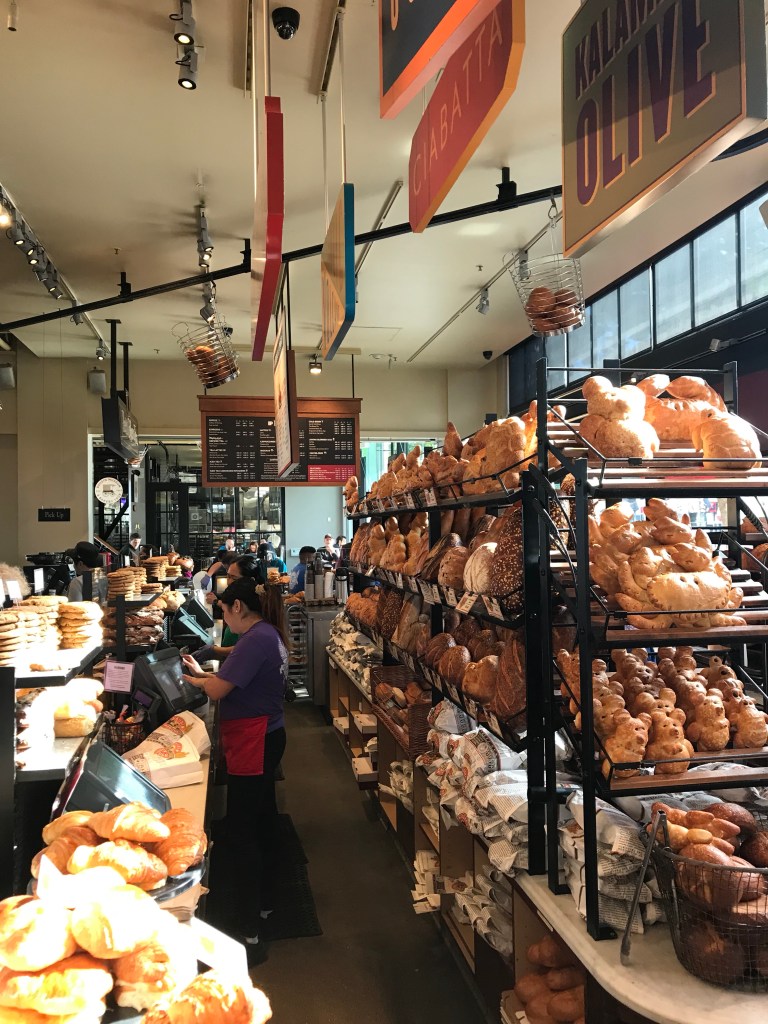
San Francisco sourdough is especially famous, and my favorite bread, because the wild yeast strains in the Bay Area give it a unique flavor. I visited San Francisco once and brought a mini-loaf of sourdough back with me—wrapped up and hidden like treasure in my suitcase.
But sourdough as a bread-making method is ancient, thousands of years older than the city itself.
If a bread labeled “sourdough” doesn’t use a starter, it’s not true sourdough. It might taste good, but it’s not the same. And that’s okay: Just know what you’re getting.
One Loaf at a Time
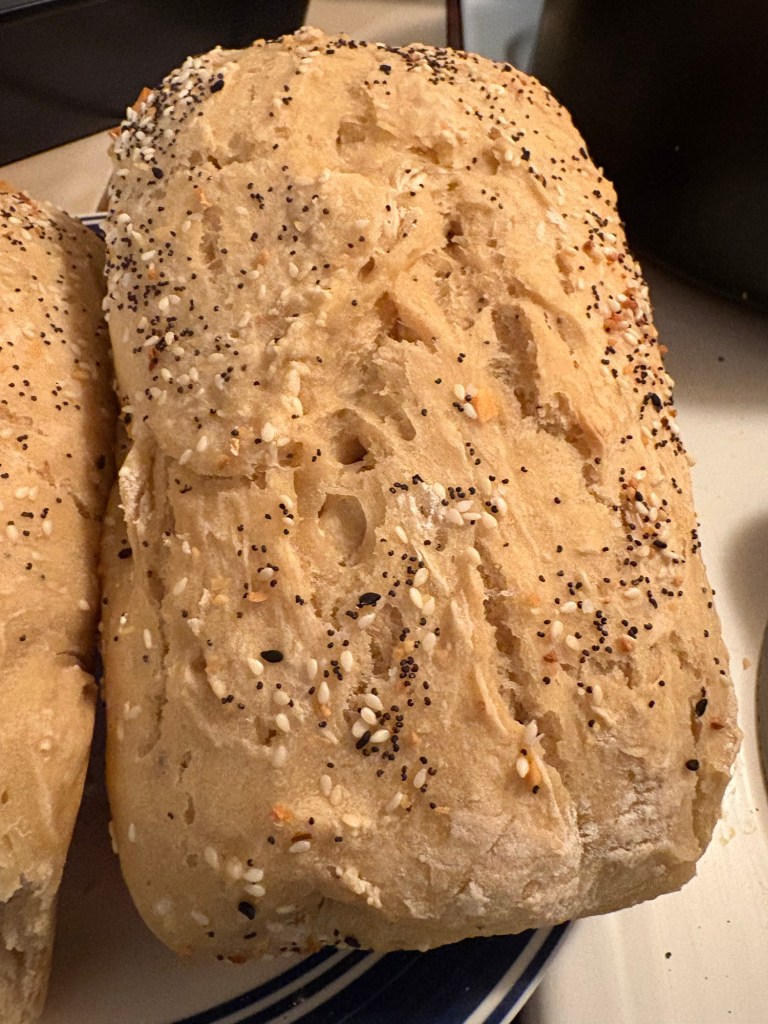
This bread recipe isn’t fancy. It’s not going to win any artisan awards. But it’s ours.
It fills the house with warmth, satisfies our picky eaters, and gives me that moment of pride every time I slice into it. If you’re looking for a starting point in baking, or just something to do with your hands on a Sunday afternoon, this loaf is a great place to begin.
I’d love to hear what simple joys you’re leaning into right now—drop a comment or share your favorite comfort food. Let’s build a little community around the things that make us feel human.

